

Musailama Kazzab was a false claimant of prophethood. Some Muslims claim Hazrat Abu Bakr (may Allah be pleased with him) killed Musailama Kazzab due to his claim of prophethood. They use this apparent precedent to try to show that any claimant to prophethood after the Holy Prophet (peace and blessings of Allah be upon him) should be killed. However, as historical evidence shows, the idea that Hazrat Abu Bakr (may Allah be pleased with him) killed Musailama because of his claim is baseless.
In 10 Hijri, a deputation of the Banu Hanifah traveled to meet the Holy Prophet (peace and blessings of Allah be upon him), Musailama being one of them. Tabari, a famous Islamic historian, records two narrations of this incident. In the first, Musailama approached the Holy Prophet (peace and blessings of Allah be upon him) and asked to be named his successor, to which he responded, “If you had asked me for this palm branch which I hold, I would not have given it to you.” The other narration is that Musailama was left behind with the baggage of his people. The deputation of Banu Hanifah accepted Islam, and said to the Holy Prophet (peace and blessings of Allah be upon him), “O Messenger of God, we have left behind a companion of ours to guard our camels and baggage.” He then replied, “His position, guarding the property of his companions, is not worse than yours” (The History of At-Tabari, Vol. 9, Pg. 96). Musailama accepted Islam, but upon reaching Al-Yamamah, he became an apostate and claimed prophethood, making a few twisted verses of poetry and presenting it to his people. He wrote a letter to the Holy Prophet (peace and blessings of Allah be upon him), which read:
“From Musailama the Messenger of God to Muhammad the Messenger of God. Peace be upon you. Indeed, I have been made a partner with you in authority. To us belongs half of the land and to the Quraish belongs the other half, but the Quraish are a transgressing people.”
The Holy Prophet (peace and blessings of Allah be upon him) responded with a letter:
“In the name of God, the Gracious, the Merciful. From Muhammad the Messenger of God to Musailama the arch-liar. Peace be upon him who follows the guidance. Now then, ‘Verily, the earth is God’s; He gives it as a heritage to whomsoever He pleases of His servants, and the end is for the God-fearing.’”
(The History of At-Tabari, Vol. 9, Pg. 107)
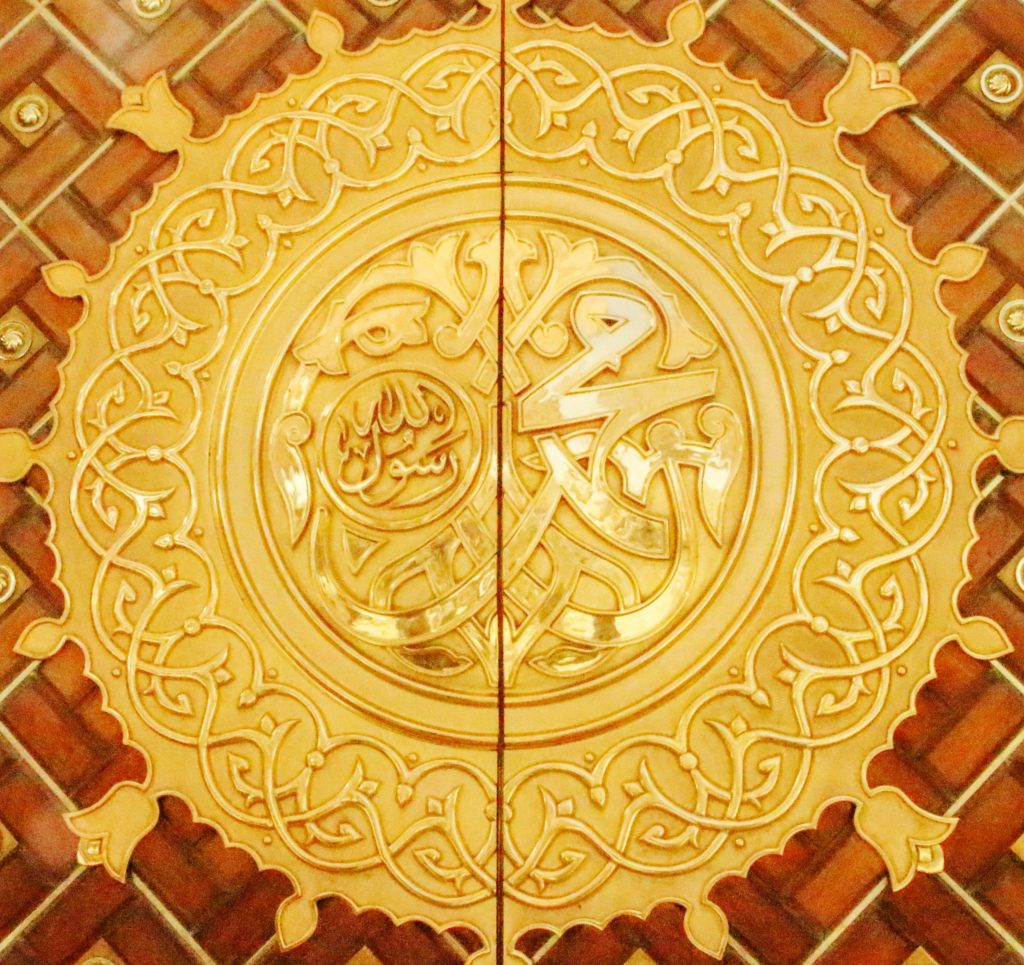
Musailama announced that the Fajr and Isha prayers were annulled, and that alcohol and adultery are allowed. He was killed in the Battle of Yamama by Wahshi bin Harb during the Caliphate of Hazrat Abu Bakr (may Allah be pleased with him).
Many contemporary Muslim clerics use Hazrat Abu Bakr’s (may Allah be pleased with him) war against Musailama to try to prove that there can be no prophet after the Holy Prophet (peace and blessings of Allah be upon him). They say the reason the companions fought against Musailama was that he claimed to be a prophet after the Holy Prophet (peace and blessings of Allah be upon him), and people believed in him. However, history tells a completely different tale.
The true reason the companions fought and killed Musailama Kazzab had nothing to do with his false claim of prophethood. If the reason he was worthy of death was his claim to prophethood, the Holy Prophet (peace and blessings of Allah be upon him) should have ordered his death in his lifetime. However, instead of ordering his death, the Holy Prophet (peace and blessings of Allah be upon him) simply replied to his letter and denied his request for power. In reality, Hazrat Abu Bakr (may Allah be pleased with him) fought many battles against multiple tribes who committed treason against the state, promoted war, and refused to pay the Zakat. Most of them made no claims to prophethood, yet they were still not pardoned. Hazrat Abu Bakr (may Allah be pleased with him) never said anything specifically about Musailama which would show that he was singled out due to his claim to prophethood. Indeed, Muslim armies were sent out to multiple locations at the same time to fight the rebels, and Sherjeel bin Hasanah (may Allah be pleased with him) was given instructions to help ‘Ikrimah (may Allah be pleased with him) in the fight against Musailama and then proceed to fight the rebels in Quza’ah.

Thus, the true reason for fighting Musailama was his rebellion against the state. He had amassed an army of forty thousand to fight against the Islamic state, and said that he would use that army to gain control over all of Arabia. He would tax Yamama himself, and not pay that tax to the government. He removed the ruler appointed by the Holy Prophet (peace and blessings of Allah be upon him) to the area, Thamama bin Athal, (may Allah be pleased with him) and took power for himself.
Aswad Ansi also claimed to be a prophet during the life of the Holy Prophet (peace and blessings of Allah be upon him), yet he was killed due to his provoking war against the Muslims during the life of the Prophet (peace and blessings of Allah be upon him). Musailama, however, did not provoke war or kill Muslims during the lifetime of the Holy Prophet (peace and blessings of Allah be upon him), so he was spared. When he did begin rebellions during the Caliphate of Hazrat Abu Bakr (may Allah be pleased with him), action was taken against him. The common underlying factor is not a claim to prophethood, but is the act of rebellion against the state.
The true consensus of the companions can be stated in the words of Hazrat Aisha (peace be upon her), who said to the companions, “Say he is Khatamul Anbiya [The Seal of the Prophets] but do not say there is no prophet after him.” (Durr-e-Manthoor, Under 33:40) No companion refuted her statement, thus showing they agreed with her. Therefore, they reached a consensus that prophets can come after the Holy Prophet (peace and blessings of Allah be upon him). To contradict the consensus of the companions and clear historical evidence leaves the Muslims blind to the possibility of a prophet coming after the Holy Prophet (peace and blessings of Allah be upon him).
Bibliography:
Jarīr., Ṭabarī, Abu Jaọfar Muḥammad ibn. The History of Al-Tabarī. Translated by Ismail K. Poonawala, vol. 9, State University of New York Press, 1990.
Tafseer Durr E Mansoor Urdu Complete / تفسیر در منثور مکمل 6 جلدیں : ادارہ ضیاء المصنفین ضیاء القرآن : Free Download, Borrow, and Streaming : Internet Archive page 578