

Hazrat Mirza Ghulam Ahmad (peace be upon him) of Qadian was appointed by Allah the Almighty as the Messiah of the latter days. He was the awaited reformer prophesied in the Holy Quran and numerous previous scriptures who was to come and guide humanity. He was appointed to reestablish the greatness of God Almighty and His Messenger (peace and blessings of Allah be upon him) in the world. His mission was to reveal the truths of the Holy Quran and prove the brilliance of this mighty book.
The Promised Messiah (peace be upon him) was sent with a great abundance of wealth – not of gold or silver, but with a treasure which was necessary for the survival of the Muslim Ummah. He was bestowed with the divine riches, the treasures of wisdom, and the sacred knowledge of the Holy Quran. True wealth in reality is nothing but true wisdom, as stated in the Holy Quran, “And whoever is granted wisdom has indeed been granted abundant wealth.”1 The Promised Messiah (peace be upon him) has explained that, in reality, ‘wisdom’ refers to the knowledge of the Holy Quran.2
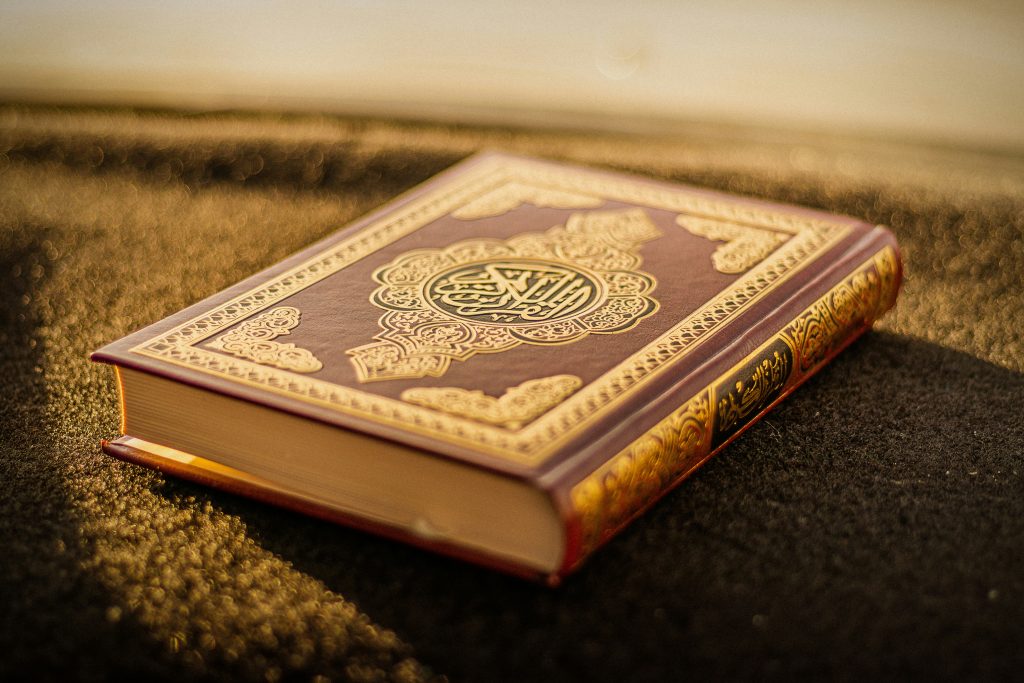
The Promised Messiah (peace be upon him) was bestowed an extraordinary understanding of the Holy Quran. His literary works stand unmatched in comparison to all intellectuals and scholars of the past and present. The vastness of knowledge bestowed upon him is parallel to none in the entire Ummah. Allah the Almighty Himself imparted the teachings of the Holy Quran to him, revealing, “الرحمٰن – علم القراٰن,” signifying, “God taught you the Holy Quran and revealed its true essence to you.”3 Expressing his God-gifted knowledge of the Holy Quran, the Promised Messiah (peace be upon him) stated:
“I have been given the sign of expressing the truths and verities of the Holy Quran, and no one can challenge me on this.”4
He further wrote:
“If anyone can be found to match me in explaining the hidden meanings of the Quran, then I am false.”5
In his book Zaruratul Imam (The Need for the Imam), he stated:
“God has vouchsafed to me the knowledge of the Quran and has named me Awwal-ul-Muminin [the first of the believers]. He has filled me with spiritual verities and truths like an ocean. He has revealed to me again and again that no one can equal me in my love for God and His recognition. God is my witness that I am ready for this contest.”6
Unparalleled knowledge of the Holy Quran was indeed a miracle which was given to the Promised Messiah (peace be upon him). His commentary of the Holy Quran is most marvellous and miraculous. His knowledge of the Holy Quran astonished both friends and opponents. He illuminated the errors made by previous scholars in their attempt to comprehend the Holy Quran and granted them its true and pure understanding. But sadly, people opposed the Promised Messiah (peace be upon him) and they remained on their errors and refused to benefit from the divine light. It was regarding these people, that the Holy Prophet (peace and blessings of Allah be upon him) said “He will distribute wealth such that no one will accept it”7
The Promised Messiah (peace be upon him) invited his opponents and challenged them to compete with him in the understanding of the Holy Quran, but none dared to stand against him. In his book Asmani Faisla (The Heavenly Decree), he mentions four signs of true believers and challenges all Islamic scholars to a contest. He writes, “The fourth sign pertains to the deep understanding of the Quran – I declare, and swear in the name of Allah, the Glorious, that if I am defeated in this contest, I shall myself publish my confession and say that I was in the wrong.”8 However, sadly none accepted the challenge.
The Promised Messiah (peace be upon him) issued numerous challenges to his opponents, conclusively demonstrating his superiority in understanding the Holy Quran. His literature is a living witness of his intelligence and God-gifted knowledge of the Holy Quran. He also challenged Maulawi Muhammad Hussian Batalvi, a very famous Ahl-e-Hadith scholar and editor of the magazine, Isha‘atus Sunnah to a contest. Promised Messiah (peace be upon him) openly challenged him and wrote in his book Aina-Kamalat-e-Islam (The Mirror of the Excellences of Islam) page 605-606:
“The intelligent can understand that, along with other Signs, there are also Signs that are composed of verities, spiritual insights, and fine points of wisdom, which are especially bestowed upon those who possess virtuous souls and are the recipients of abundant [Divine] grace as is emphatically proclaimed by the verse: ‘Which none shall touch except those who are purified’ (Surah al-Waqi‘ah, 56:80), and the verse, ‘And whoever is granted wisdom has indeed been granted abundant good’ (Surah al-Baqarah, 2:270). So this will be a manifestly clear Sign to judge my truth and falsehood against that of Miyan Muhammad Husain. To make this determination, an excellent arrangement would be to hold a brief meeting in which the appointed judges may select a few surahs of the Noble Quran—containing not less than 80 verses in number—for a commentary… It must be obligatory that the commentary be written in fluent, eloquent Arabic language with rhyming phrases, and not be less than 10 juzw [volumes] in length. All the verities and insights written in the commentary should not be plagiarized, but should be new insights and unique subtleties not found in any other book. Moreover, they should not contravene the original Quranic teachings, but should, instead, demonstrate their power and magnificence… Then, if my humble self is found incapable or deficient in stating the verities and insights [of the Holy Quran] and composing eloquent and fluent Arabic and vibrant and refreshing couplets in praise [of the Holy Prophet], or even if Muhammad Husain is found to be at par with me, I would immediately admit to being in the wrong and would burn my books.”9
The Promised Messiah (peace be upon him) also published a challenge to the Christian missionaries, stating that Surah Al-Fatihah contains more truths than the Gospels and the Torah combined in the following words:
“If they really believe that the Torah or the Gospels contain wisdom and truth, and manifest the excellences of the Divine Word in the most perfect way, I am ready to offer them a reward of five hundred rupees in cash if they can produce from their voluminous books, which are about seventy in number, the same truths and verities of the Law, the well-organized and well-arranged pearls of wisdom and knowledge, and excellences of the Divine Word, which we present from Surah Al-Fatihah. And if this reward is not enough, I am willing to increase it as much as possible on their request. In order to come to a decision, I will prepare and publish a commentary of Surah Al-Fatihah, in which I will present a detailed exegesis of the verities, truths, and characteristics of the Divine Word contained in it. Then the Christian clergymen will be required to show that the Torah, the Gospel and their other books contain the same truths and verities found in Surah Al-Fatihah and possess all the features that distinguish the Word of God.”10
The Christian missionaries were left speechless – a fact they later confessed.11
Without a doubt, the prophecy of the Holy Prophet (peace and blessings of Allah be upon him) has come true and the heavenly wealth was distributed by the Promised Messiah (peace be upon him). The world has awaited centuries for this wealth, yet we are the blessed ones to live in such a time when this wealth of knowledge is easily within reach.
“The treasures that lay buried for thousands of years,
Today I give them away if I find anyone who seeks them.”12

References:
- Quran (2;270)
- Ruhani Khazain Vol. 4 p. 93 (2021 Edition)
- Ruhani Khazain Vol. 22 p. 73 (2021 Edition)
- Ruhani Khazain Vol. 13 p. 496 (2021 Edition)
- Ruhani Khazain Vol 17 p. 346 (2021 Edition)
- Ahmad Ghulam, The Need for the Imam p. 52 (2007)
- Sahih al-Bukhari, Kitab ahadith al-Anbiya, hadith 3448
- Ruhani Khazain Vol. 4 p. 300 (2021 Edition)
- Ahmad Ghulam, The Mirror of the Excellences of Islam (Islam International, 2025), p. 605
- Ahmad Ghulam, Four Questions by Mr Sirājuddīn, a Christian, and Their Answers (Islam International, 2009), p. 38–39, https://files.alislam.cloud/pdf/Four-Questions-Sirajuddin.pdf
- Al-Furqan, Jan 1967 p. 3
- Ahmad Ghulam, Barahin-e-Ahmadiyya Vol 5 English, p. 209